

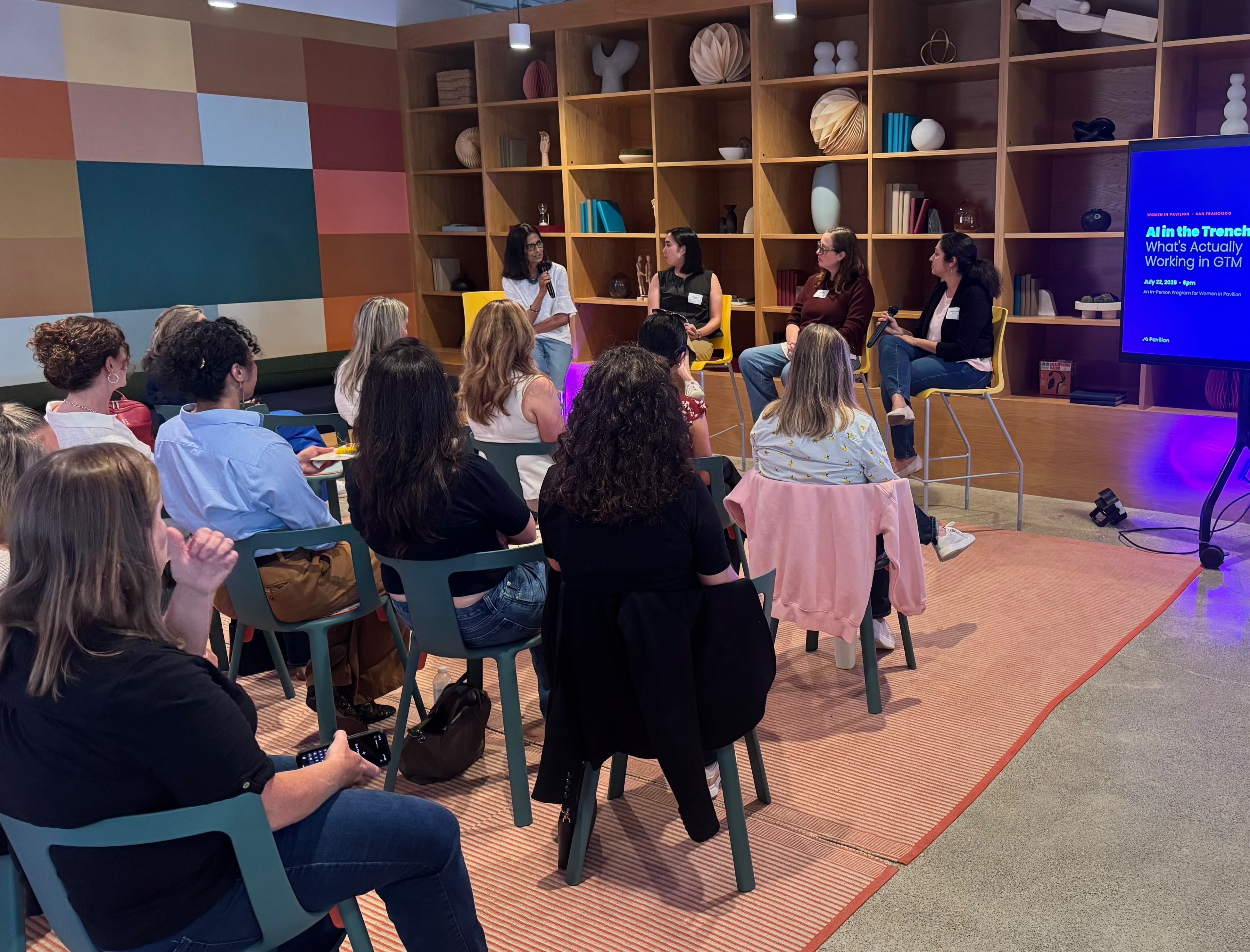
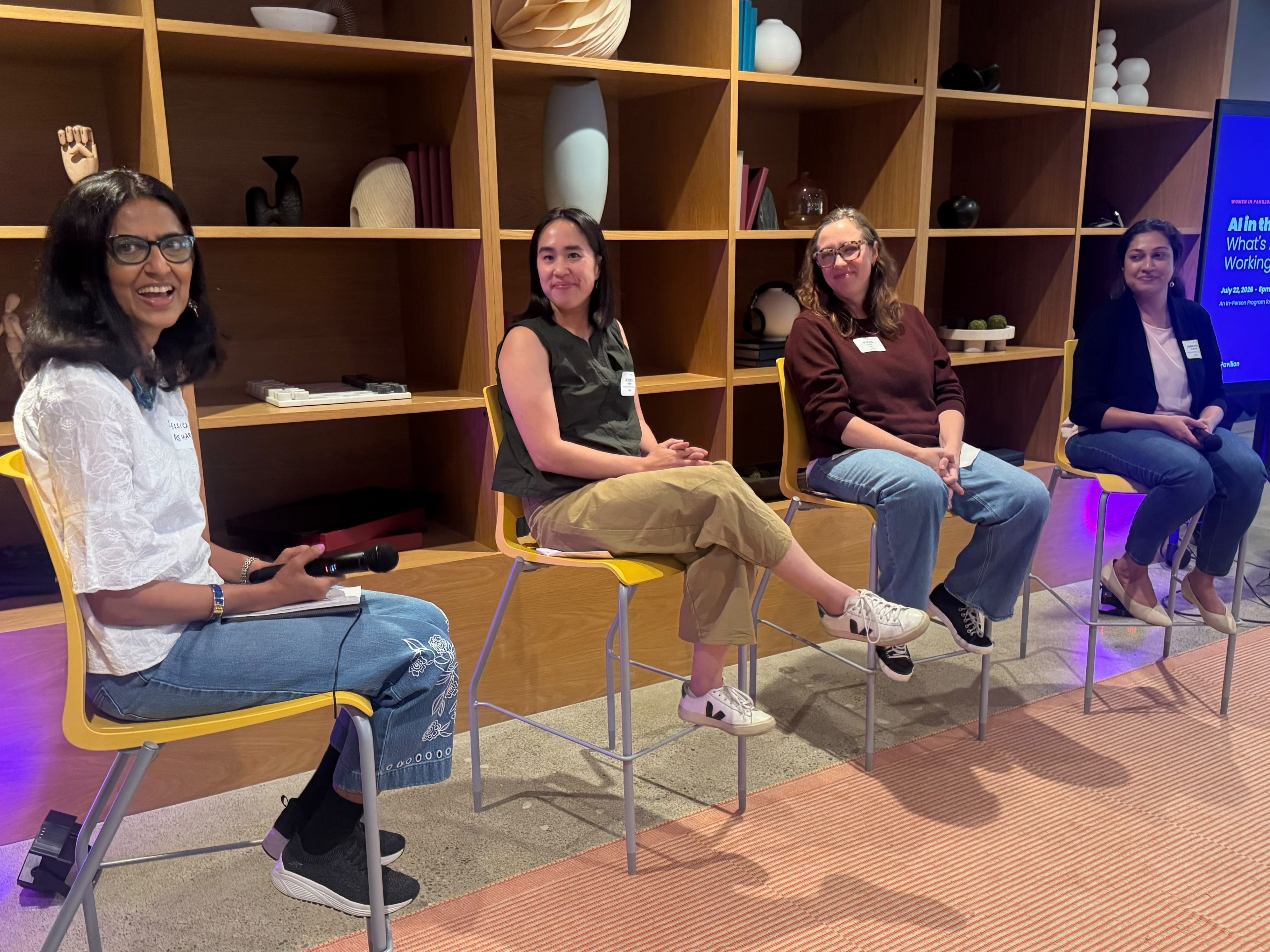
We loved hosting the Pavilion community for an "AI in the Trenches" panel with GTM leaders at Asana, Canva, and Vanta.
For these enterprises, which range from $300M to $3B in annual revenue, their GTM AI transformations unlocked when:
- their data layers reached an AI-ready quality level (this took time)
- they bought one or two go-to orchestration tools to let employees experiment with building workflows, and
- they staffed internal tool builds with full-stack engineering, product, & design attention.
Here are our favorite takeaways from the discussion.
Enterprises are building UI's for sales, CS, SE's, etc.
While enterprises are giving their teams Claude and other LLMs, they're also creating non-chat interfaces for their sellers and other GTM employees. For example:
Vanta's CSP
Vanta built a customer success platform in-house that replaced their incumbent vendor. This originated from the grassroots innovation of CS leader Ruth Franz Gale, who didn't have an engineering background, but became a key builder.
Vanta needed totally different CSP functionality for their longtail of small, high-velocity customers, their Fortune 500 customers, and segments in between. Their new tool brings the exact features they need into one beautiful UI that scores and stack-ranks the best accounts to focus on. It also pre-loads prescriptive actions for account managers, like a click-to-action email sequence that escalates to a phone call if certain product actions are or aren't taken.
Stevie Case, CRO at Vanta, explains that they don't just build for the sake of building — they identified the CSP as an high-impact place to allocate their energy and risk. Vanta also built a signals engine, and is working on a version of Cursor's ChatGTM for sellers.
Asana's signals and prospecting engine
Asana created a signals and prospecting engine that prioritizes a seller's book of business to highlight the top 20% to focus on. It also automates manual processes like research, creating account POVs, and writing personalized messages. They wanted to save sellers from visiting the 6, 7, or more surfaces they were frequenting.
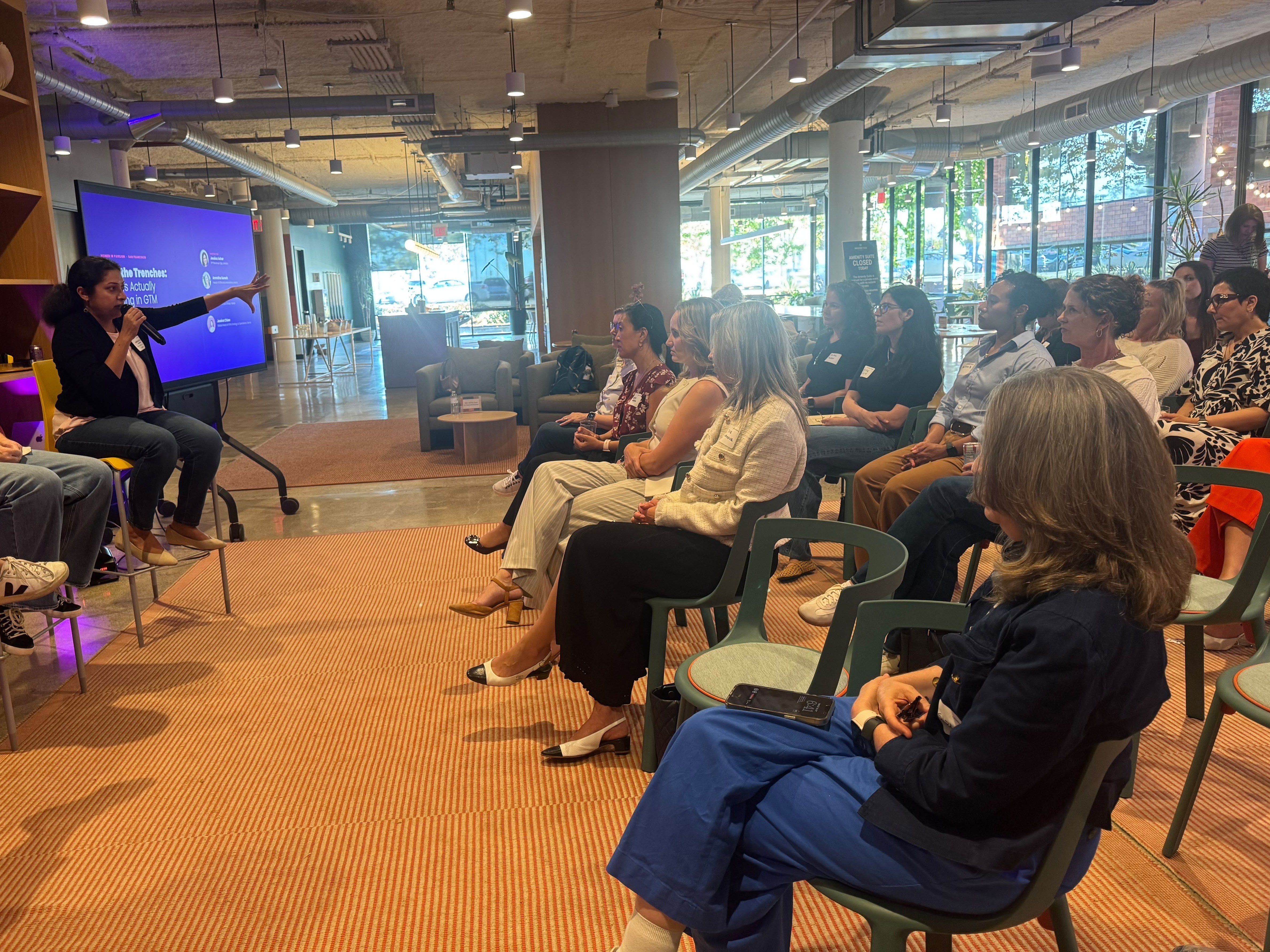
Amrutha Suresh, Head of GTM AI & Innovation, described how the team developed this engine like a true product, which began with studying their sales end users and inviting feedback from both the fans and the skeptical naysayers.
The A/B tested pilot showed significant improvements in meeting booking rate. Then, Asana scaled it into a production-grade solution for 300+ sellers, where information is being surfaced into Salesforce — both through daily batch jobs and on-demand (e.g., the ability to click a button and generate a POV for an account).

Canva's automated collateral creation
Canva also built a signals engine. It started with an experimental Slack channel and mini-tools in Salesforce and Salesloft. But, like Asana, they realized they needed a consolidated UI to simplify sellers' lives.
So they set out to build an app, staffing the project with a product team of full-stack engineers and PMs. Today, it offers daily briefings, action queues, and reporting visibility for leadership. And the prospecting agents they've built are showing better meeting conversion rates and deal value.
Canva also built skills for automated sales deck and collateral generation.
A library of 30 skills can be remixed into smaller packs for roles like AEs and CSMs — tasks like discovery deck creation, QBR, and "today" call prep. These pull from context in Slack, Salesforce, Canva, Google Drive, 3rd party enrichments, external news, customer proof points, and product telemetry. Their data lake makes this possible.
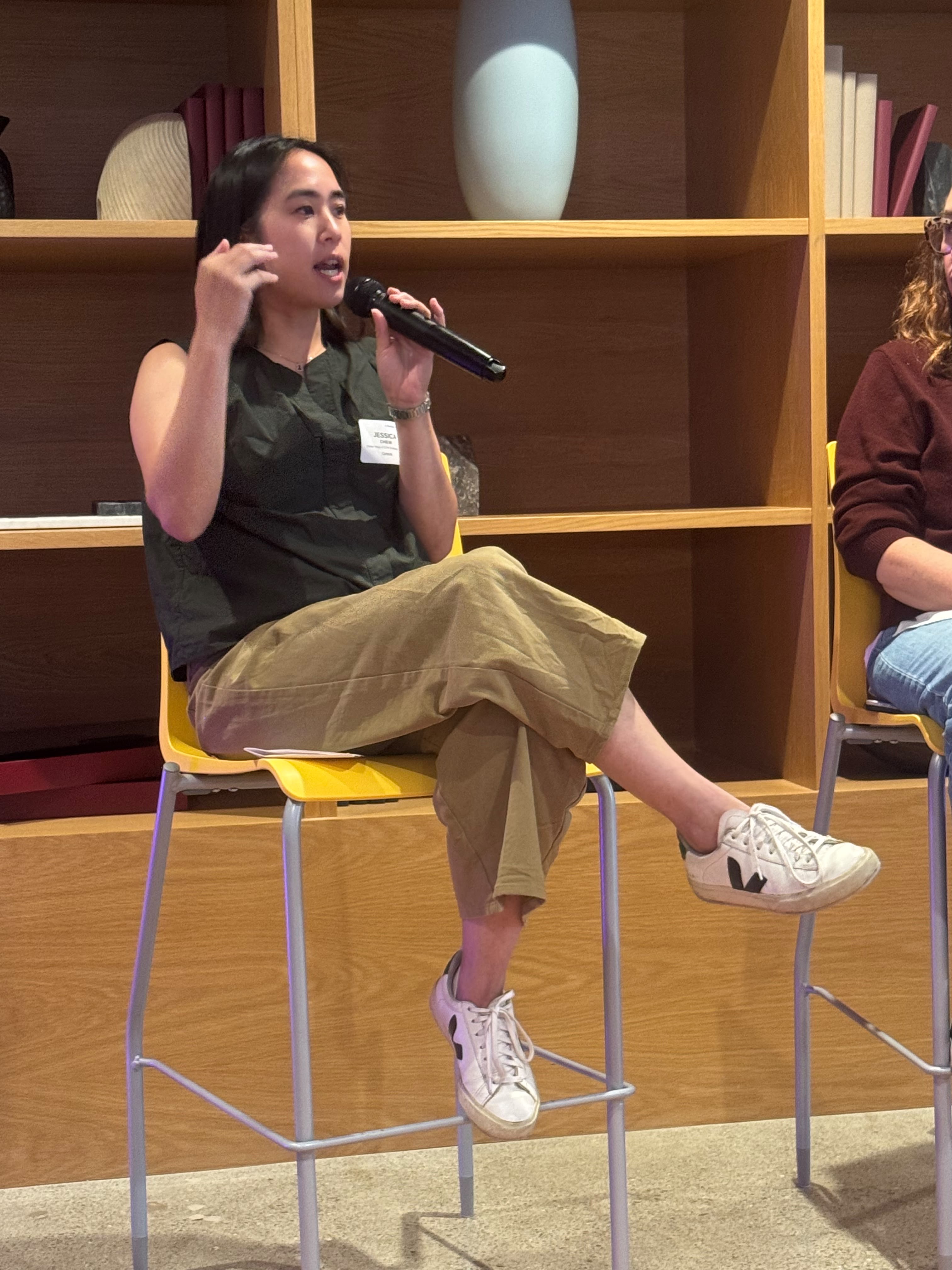
Jessica Chiew, Global Head of GTM Strategy and Operations at Canva, says reps save hours of time with these automations, and lowers the amount of variability in first call structure.
What an enterprise-grade data layer needs
Getting a quality data layer meant spending significant time and energy on:
- aggregating data in a lake (e.g., pulling CRM data, billing data, Gong calls, etc. into Databricks or Snowflake)
- making sure it's clean, and
- investing in very high-quality 1st and 3rd party data (e.g., pulling in signals and web activity through Clay, Segment, Amplitude, SixSense, ZoomInfo, etc).
This high-quality context was the first stage gate before seeing ROI from AI.
Everyone emphasized their investment in high-quality signals.
And all panelists said this took longer than people seem to say on LinkedIn.
In fact, all the building discussed here took time — the scale we were talking about was often 6-9 months for full tool builds or 1-2 years for broader transformation initiatives. A simple-sounding idea can be difficult to execute well.
The upside is that once the foundational pipes are in place, it's much faster to build more tools on top of it.
The stack looks like: (1) a data lake, (2) an orchestration layer, then (3) an application layer / agent layer. More building is happening at layer 3, more buying at layers 1 and 2.
Orchestration tools supercharge grassroots employee innovation
Jessica Chiew shared that Canva's bottoms-up innovation really gained speed when they chose an agent builder — theirs is Relevance — which democratizes the ability for Canva employees to build their own agentic workflows through no-code prompting.
At Vanta, that tool is Dust. We also heard a lot of Clay and Claude in the room, but noticed that low-code easy tools that were pre-configured with connectors accelerated employees a lot. They discover alpha, then GTM AI leadership doubles down on the best solutions and scales them.
Top-down execution is critical
Canva, Vanta, and Asana all described a companywide quality to the GTM AI initiatives they've decided to bring to production. This might look like:
- Deep partnerships with EPD (engineering, product, design) to build production-grade solutions.
- Treating them like real products, not a collection of unsupported point solutions and 3rd-party tools.
- Using design best practices to study end-users like sellers.
- Leaning on executives and front-line managers to reinforce behavior change among ICs to adopt these tools.
- Putting systems at the core of the company's GTM, with everything else orbiting them.
- Working with engineering to get access to GitHub and core systems as early as possible for GTM folks.
- Staffing dedicated AI teams in GTM.
- In Asana's case, an AI Council (which Amrutha runs) champions the grassroots AI pilots that emerge in functions around the company and surfaces them to the executive team.
An undercurrent to all this? Talent. These companies are bringing in different types of people than ever before, to enable new ways of building for GTM.
One last thing we noticed:
While everyone is using Claude, everyone's also relying on a diverse set of tools that, in some situations, meet their needs better than what's possible with a chat interface (both for building and for selling day-to-day).
These tools range from off-the-shelf vendors, to company-built internal UI's, to employee-built agents sprouting up everywhere. All need to feed off the same context and quality data at the foundation. That's where it all starts.

Big thanks to Jessica Ashar, Leela Gill, and Geoff Rodgers for gathering the first SF event for Women of Pavilion. We had a blast. And we really appreciate our panelists, Stevie, Jessica, and Amrutha, for their generosity.
Speaking of Pavilion community, if you're coming to the GTM 2026 conference in New York City from September 28 - October 1, 2026 — or the Women's Summit on the 28th — come say hi at the Octave booth!
