
The number one question I got at Sculpt by far was: “So, wdyt about Knowledge Hub?” (the new context offering Clay announced). My answer, welcome to the party ;) Honestly we’re glad to see it. It’s validating a thesis we’ve held for years. But for revenue teams, the real test is whether that context helps you figure out what’s really winning deals, and most importantly whether it can be applied across every team, motion, and agent you build. Otherwise that context is just trapped in another silo.
Even just in the last couple weeks, we’ve seen more companies come out with ‘context’ features or invest in this area. Profound. Notion. Sanity. But too many agents are still running on little text boxes where you’re supposed to describe your ICP (good luck). The ambition needs to go beyond that. Your product is evolving every day. Your market keeps moving. And new competition pops up faster than you ever imagined. If you have a business that can handle all of that inside google docs or a box that says “Who do you sell to?” — we’re all jealous.
That’s what we’ve been cooking at Octave: revenue intelligence that gives your sales team a better shot on goal. Listen to what buyers are saying, compare it with deal outcomes, and put what you learn into the next conversation.
Which pains show up in wins? Which competitive situations deserve a different play? Give the whole team a way to double down on what’s working, and deliver fast-follow wins.
Hello, New York!
We’re in NYC this week, talking GTM AI with the exec team at Meltwater alongside OpenAI, Snowflake, Zapier, and more. If you’re around and want to meet up, give me a shout!
Still buzzing from Sculpt
We loved spending time with customers, partners, and new friends at Sculpt 2026. Huge thanks to Clay for such a great event. Our roundtable dug into how GTM context makes Clay smarter, from qualification to account research, and how you can share context across workflows. Lots of great conversations about putting all that intelligence to work.
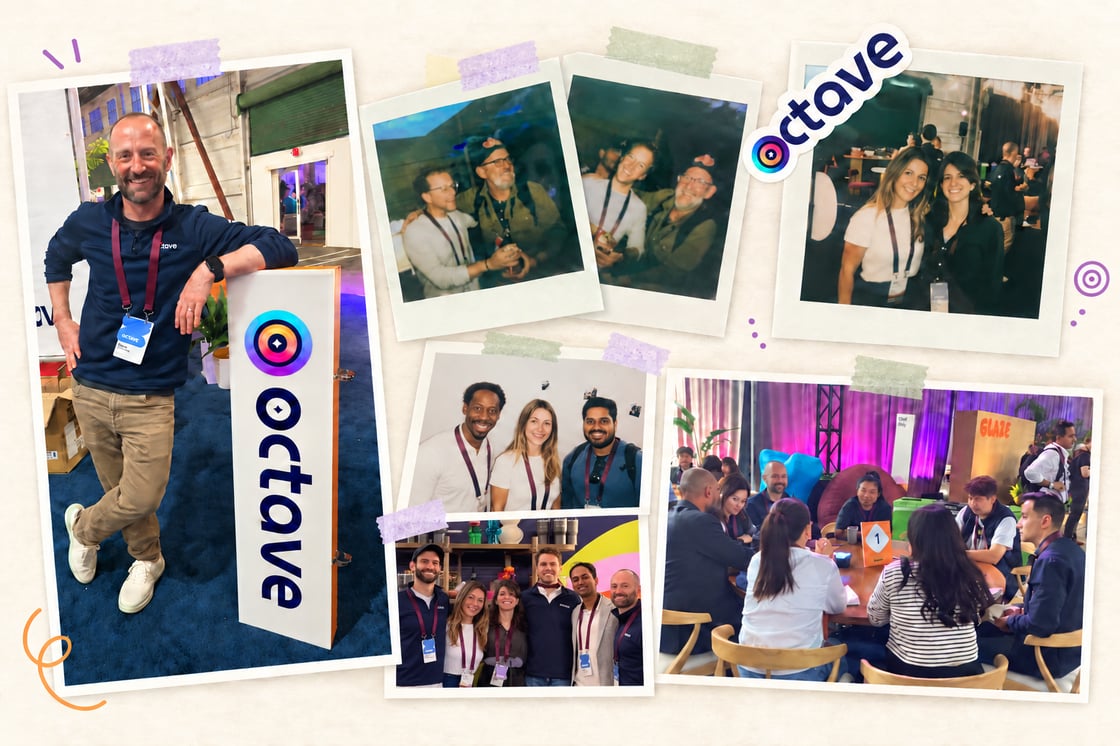
Missed us at the booth? Book some time to talk through what you’re building.
Come build with us
We’re hiring for our customer ops team! We’re pushing upmarket quickly and looking for people who love getting in the trenches with customers. If you’ve worked in customer success, GTM engineering, or a customer-facing role at a revtech or martech company, we’d love to talk. This role is in person in our SF office. Message me or Alec if that sounds like you or someone you know.
New features: Find the patterns behind your wins
We’ve rolled out a slew of powerful, multivariate revenue intelligence capabilities to explore via MCP or in the Octave app.
Our marketer’s favorite this week? Deal cohorts.
Compare win rates across groups of deals based on what buyers brought up during calls: a pain, a competitor, goals, and any other sentiment you can think of.
Just ask Claude something like:
“How often do we win deals when a prospect is shopping for Clay?”
Things get fun when you look into combinations of variables. What happens when prospects are shopping for Clay, thinking of building in-house, and the buying committee involves a PMM and a GTME?
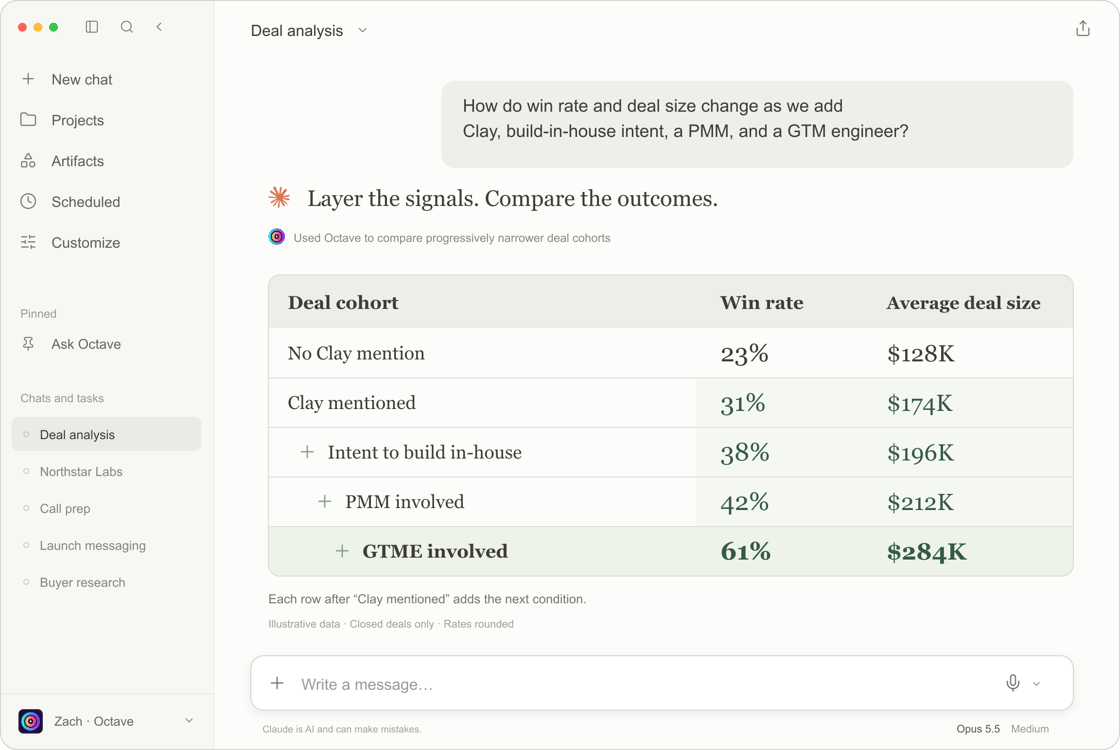
With Octave, you don’t just search transcripts for a word. You can search for concepts, topics, worries, wishes, and more. This lets you discover the unique fingerprints of your most successful sales cycles — and replicate them. Follow our changelog for the latest releases.
How Cortex turns account research into sharper sales conversations
We caught up with our friend Ryan DeForest at Cortex to get the backstory on Cantina, the internal GTM platform he built.
It brings together data from CRM, Gong, and 20+ custom agents. Octave is the brain that helps ensure every workflow understands Cortex’s products, personas, and what wins in every situation, so reps get specific guidance on why a signal matters and what to say about it to each persona.
That guidance also draws on what worked in similar deals. Before a meeting, reps get talking points suited to the buyer and deal stage. Afterward, Cantina checks which topics they covered against the strategy, and drafts follow-up that cover anything they missed. What the team learned in one deal becomes useful in the next. That’s the kind of learning loop we get excited about.
Here’s to making more of every conversation.
Zach Vidibor
